Why Every Small Business Needs Proper Bookkeeping
Running a small business means handling many roles at once. But one area many owners overlook is proper bookkeeping—the foundation of financial clarity and sustainable growth.
The Challenge of Small Business Management
Running a small business means handling many roles at once. You manage sales, talk to customers, handle suppliers, and make daily decisions that keep the business moving. But one area many owners overlook is proper bookkeeping.
At first, it may not seem important. You might rely on your bank balance or a few spreadsheets to track money. Yet without structured records, it becomes difficult to know where your business truly stands financially.
Proper bookkeeping for small businesses provides clarity, improves decision-making, and keeps the business compliant with tax regulations. More importantly, it helps prevent financial surprises that can slow down growth.
What Is Bookkeeping in a Small Business
Bookkeeping is the process of recording and organizing all financial transactions of a business. It ensures every rupee coming in and going out is properly documented. This allows business owners to understand their financial health and manage operations more confidently.
What Bookkeeping Actually Includes
Recording Sales & Income
Documenting all revenue transactions
Tracking Expenses
Recording all purchases and costs
Managing Invoices
Organizing invoices and payment records
Monitoring Receivables
Tracking money owed to and by the business
Organizing Documents
Storing receipts and financial records
Preparing Reports
Creating basic financial statements
Key Point: These records form the foundation of your business finances. They enable you to understand your financial health and make informed decisions about growth and operations.
Bookkeeping vs Accounting for Small Businesses
Many business owners use bookkeeping and accounting interchangeably, but they serve different roles.
Focuses on recording financial transactions accurately. It's the day-to-day work of documenting income, expenses, and financial activities.
Analyzes those records to prepare reports, forecasts, and financial strategies. It builds insights on top of bookkeeping data.
Think of it this way: Bookkeeping is the foundation, while accounting builds insights on top of that data.
Why Many Small Businesses Ignore Bookkeeping at First
In the early stages, business owners often believe bookkeeping is not urgent. Common reasons include:
Assuming the bank balance reflects the business situation
Keeping receipts and invoices scattered across different places
Updating records only during tax season
Prioritizing sales and operations over financial tracking
However, as the business grows, this approach often leads to confusion and financial stress. Organized bookkeeping from the start prevents these problems.
Why Bookkeeping Is Important for Small Business Owners
Bookkeeping plays a critical role in helping small businesses maintain financial stability and make informed decisions.
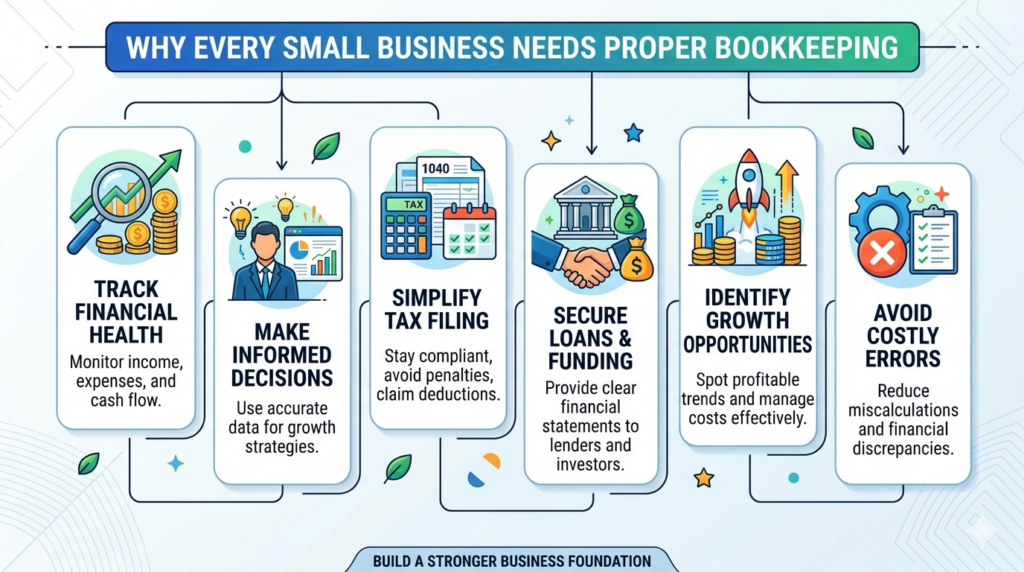
It gives you a clear picture of your business finances
- How much money your business earns
- How much it spends
- Whether the business is truly profitable
Without accurate records, business owners may rely on assumptions instead of real financial data.
It helps you manage cash flow effectively
- Anticipate upcoming expenses
- Plan payments to suppliers
- Follow up on pending invoices
- Avoid unexpected cash shortages
Businesses that monitor cash flow closely are better prepared for operational challenges.
It keeps your tax records organized
- Maintain accurate expense records
- Track deductible costs
- Prepare financial documents quickly
- Reduce the risk of errors and penalties
Instead of scrambling for paperwork at the end of the year, businesses with organized books can approach tax season with confidence.
It supports better business decisions
- Can the business afford to hire more staff?
- Is it the right time to invest in marketing?
- Are certain products or services more profitable?
When decisions are based on accurate financial data, businesses can grow more sustainably.
Problems Small Businesses Face Without Proper Bookkeeping
Ignoring bookkeeping often leads to challenges that affect both financial health and long-term growth.
Unclear Profitability
Revenue alone does not reveal whether a business is making a profit. Without accurate records, hidden expenses may reduce profitability without the owner realizing it.
Stress During Tax Season
When records are incomplete or disorganized, tax filing becomes time-consuming and stressful. Business owners may spend days searching for invoices, receipts, and expense details that should already be documented.
Unexpected Cash Shortages
A business may appear busy and successful but still struggle with cash flow. Without proper bookkeeping, it becomes difficult to track outstanding payments, upcoming bills, and financial obligations.
Difficulty Securing Loans or Investment
Banks and investors usually request financial statements before approving funding. Businesses without clean financial records may find it difficult to demonstrate their financial stability.
Limited Ability to Plan for Growth
Growth requires reliable financial data. Without historical records, it becomes difficult to forecast revenue, plan budgets, or evaluate expansion opportunities.
Key Benefits of Proper Bookkeeping for Small Businesses
When bookkeeping is done correctly, it provides several practical advantages that strengthen business operations.
Better Control Over Income and Expenses
Accurate records help identify spending patterns and areas where costs can be reduced. This allows businesses to manage resources more efficiently.
Easier Budgeting and Financial Planning
With consistent bookkeeping, businesses can develop realistic budgets based on actual financial data. This improves financial discipline and long-term planning.
Access to Reliable Financial Reports
Bookkeeping enables the preparation of important reports such as Profit and Loss Statements, Balance Sheets, and Cash Flow Statements. These reports provide valuable insights into business performance.
Increased Credibility With Lenders and Investors
Businesses with well-organized financial records appear more trustworthy to lenders and partners. Clean financial statements demonstrate responsible financial management.
More Time to Focus on Business Growth
When bookkeeping systems are structured, business owners spend less time managing paperwork and more time focusing on strategy, customers, and expansion.
Should You Do Bookkeeping Yourself or Hire a Professional
Some small businesses manage bookkeeping internally, while others choose to outsource it. The right choice often depends on the size and complexity of the business.
Handling Bookkeeping Yourself May Be Manageable When:
- The business has very few transactions
- Financial records are simple
- The owner has time to maintain accounts consistently
In these cases, basic accounting software may help organize financial data.
Professional Bookkeeping Support Becomes Valuable When:
- The business is growing quickly
- Transactions are increasing
- Compliance and tax requirements become more complex
- The owner lacks time to maintain records
Outsourcing bookkeeping allows business owners to focus on core operations while experts handle financial tracking.
Simple Bookkeeping Best Practices for Small Business Owners
Improving bookkeeping does not always require complex systems. Small steps can significantly improve financial organization.
Keep personal and business finances separate
Record transactions regularly instead of delaying updates
Store receipts and invoices in one organized system
Review financial reports every month
Use reliable bookkeeping software when needed
Key Takeaway: Consistency is the most important factor in maintaining accurate records.
Signs Your Small Business Needs Better Bookkeeping
Many businesses realize the importance of bookkeeping only after facing recurring financial challenges. Common signs include:
You are unsure how much profit the business actually makes
Personal and business expenses are mixed together
Receipts and invoices are scattered across multiple places
Tax season causes significant stress each year
Financial decisions are made without updated reports
If these situations sound familiar, it may be time to improve your bookkeeping process.
How Proper Bookkeeping Supports Business Growth
Bookkeeping does more than maintain records. It helps businesses build a strong financial foundation for growth. Accurate financial data allows businesses to:
Monitor profitability over time
Plan future investments
Prepare budgets and forecasts
Evaluate expansion opportunities
Approach investors or lenders confidently
Businesses that maintain organized books are better prepared to scale operations and adapt to market changes.
Final Thoughts
Bookkeeping may not be the most exciting part of running a business, but it plays a vital role in long-term success. Proper bookkeeping helps small businesses:
- Maintain financial clarity
- Manage cash flow effectively
- Stay compliant with tax requirements
- Make informed decisions based on real data
More importantly, it provides the confidence that the business is operating on a solid financial foundation.
For small business owners who want to grow sustainably, organized financial records are not just helpful. They are essential.
Ready to Organize Your Business Finances?
Let our bookkeeping experts help you establish systems that provide clarity, compliance, and control.