Cash Flow vs Profit: What Every Entrepreneur Should Know
Your business is making sales. Your profit and loss statement looks decent. But your bank balance still feels tight. If that sounds familiar, you are not alone.
Many entrepreneurs assume profit means the business is financially healthy. In reality, profit and cash flow measure two different things. A business can look profitable on paper and still struggle to pay salaries, rent, vendors, or taxes on time. That is why understanding cash flow vs profit is not just an accounting lesson. It is a survival skill for business owners.
For entrepreneurs and SME owners, this topic sits right inside the Accounting & Finance Basics cluster. It helps business owners understand why strong sales do not always translate into financial stability.
The Core Argument
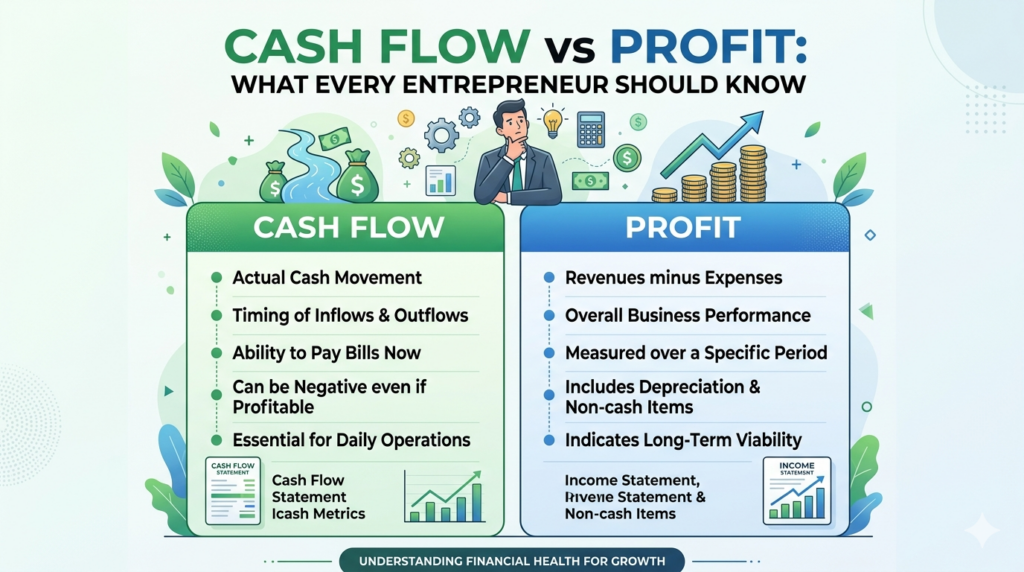
Profit answers, "Is the business making money overall?" while Cash flow answers, "Do we have enough money available right now to run the business?" Understanding this distinction is critical for long-term viability and short-term survival.
Cash Flow vs Profit: Why Entrepreneurs Often Confuse the Two
At first glance, profit and cash flow can seem like the same thing. Both deal with money, appear in financial discussions, and affect business decisions. However, they address very different aspects of your company's health.
This confusion usually starts when business owners focus only on revenue or net profit. If invoices have been raised and sales are recorded, the business may look successful. But if customers have not paid yet, the money is not actually in the bank. That gap is where cash pressure begins, often requiring professional taxation compliance services to manage the resulting complexities.
Why "profitable on paper" does not always mean financially healthy
A profitable business can still be under stress if cash is stuck in unpaid invoices, inventory, or future receivables. For example, you may close a large client deal this month. On paper, that revenue boosts your results. But if the client pays after 60 or 90 days, you still need to cover payroll, rent, and supplier payments today.
What Is Profit in Business
Profit is the money left after expenses are deducted from revenue. It helps you understand whether your business model works over time. If your business consistently earns more than it spends, that is a sign of long-term viability.
| Type of Profit | Definition |
|---|---|
| Gross Profit | Revenue minus the direct cost of producing or delivering what you sell. |
| Operating Profit | What remains after operating expenses like salaries and rent are deducted from gross profit. |
| Net Profit | The final amount left after all expenses, including taxes and interest, are deducted. |
What Is Cash Flow in Business
Cash flow is the movement of money in and out of your business over a period of time. It reflects actual liquidity. Unlike profit, cash flow is based on real money movement. If a customer owes you ₹5 lakh but has not paid yet, that amount may appear in revenue, but not in your bank account. Cash flow only improves when the money is actually received.
This is where our audit and assurance services can help you verify the accuracy of your cash positions and financial reporting.
Avoid Costly Startup Mistakes
Get a free diagnostic call to identify gaps in your startup’s structure, compliance, and financial systems before they become expensive problems.
Book Your Free Diagnostic CallWhy Profitable Businesses Still Run Out of Cash
The answer usually comes down to timing, working capital, and growth-related outflows. If your customers take 30, 60, or 90 days to pay, your revenue may look strong while your cash position remains weak.
Growth often increases pressure before it creates relief. When a business grows, it may need to buy more inventory or hire more staff, which requires proper business setup and registration to ensure all systems are scalable.
Difference Between Cash Flow and Profit
Here is the simplest way to understand the key distinctions:
- Timing: Revenue is recorded when earned (accrual), but cash flow only reflects when money changes hands.
- Purpose: Profit measures performance; Cash flow measures survival.
- Reporting: The income statement shows profitability; the cash flow statement shows actual liquidity.
Which Matters More for Entrepreneurs?
It depends on the stage of the business. For startups and growing companies, new company formation and initial growth phases should focus heavily on cash flow to ensure survival. For established businesses, profitability becomes the stronger measure of long-term strength and value creation.
Monthly Cash Flow Checklist for SME Owners
- Review your bank balance trend, not just current balance.
- Track unpaid invoices every week.
- Watch how long customers take to pay.
- Review upcoming salary, rent, vendor, and tax commitments.
- Prepare a simple 3-month cash forecast.
- Compare operating profit with operating cash flow.
If you find these tasks overwhelming, our corporate legal advisory services and financial experts can guide you through setting up robust systems.
Final Takeaway: Structure Over Effort
Profit builds the future. Cash flow keeps the business alive long enough to reach it. Transform your startup's chaos into a streamlined, compliant, and growing business with the right consulting partner.
FAQs on Cash Flow vs Profit
Profit is the money left after expenses are deducted from revenue. Cash flow is the actual movement of money in and out of the business. Profit shows long-term performance, while cash flow shows short-term liquidity.
Yes. This can happen when customers pay late, inventory is bought upfront, or expenses must be paid before revenue is collected. Proper GST registration and return filing can also impact cash flow timing.
Cash flow is the lifeblood of any organization. It allows you to pay salaries, rent, suppliers, and taxes on time. Without healthy cash flow, daily operations become difficult even if the business looks profitable on paper.